How To Stay Mindful While Travelling
Mindful Journeys: How to Travel with Presence and Purpose
When you set off on a journey across the World you can’t say with any level of certainty what lies ahead. Travel isn’t just about reaching your destinations, there is so much for you to experience, on every journey, along the way. When mindfulness becomes integral to your adventures, every moment becomes richer, calmer, and undoubtably life enhancing.
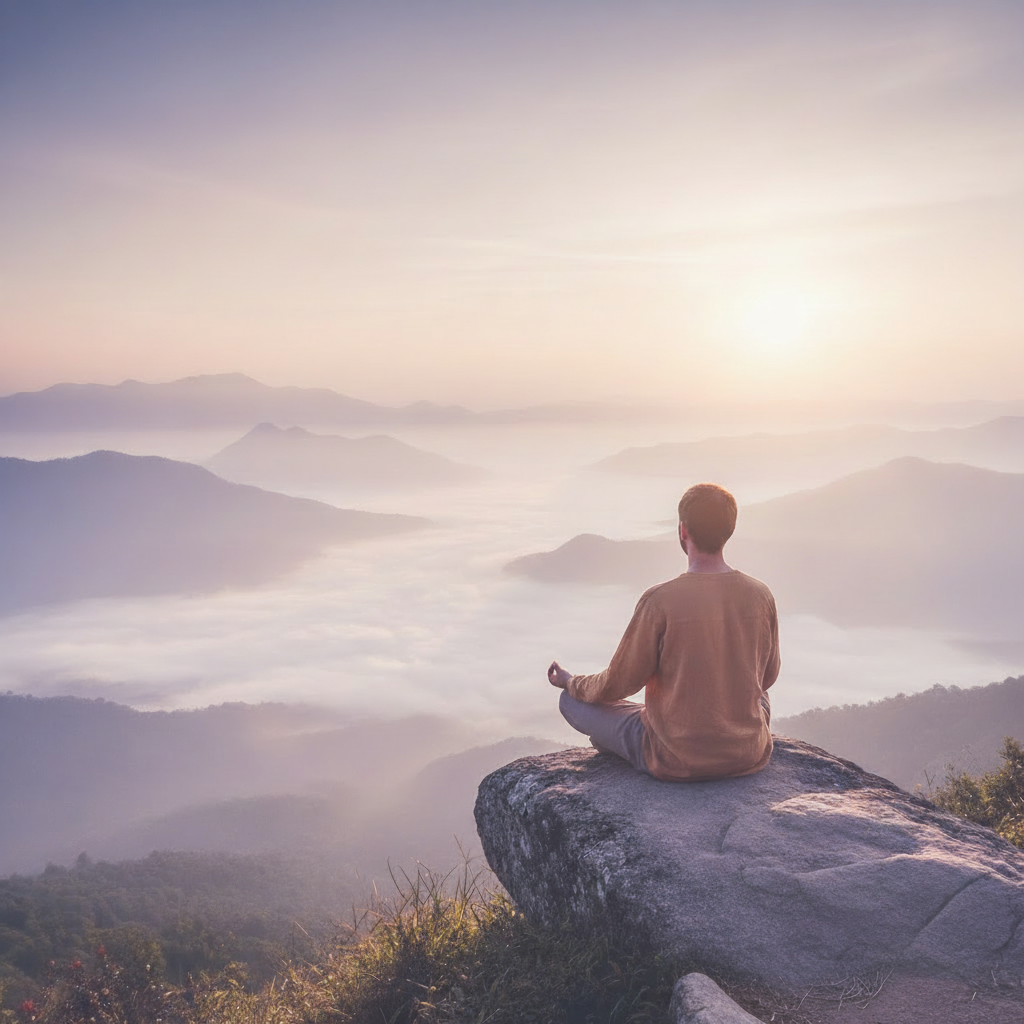
The Art of Mindful Travel
You might wonder “what exactly is mindfulness”? Perhaps the simplest explanation is, knowing what you are experiencing, while you are experiencing it. Tuning into your thoughts, surroundings, and emotions, instead of drifting through life on autopilot.
When you incorporate mindfulness into your travels, it is sure to help you to stay grounded, to manage any potential stress and embrace the experience, even when things don’t go smoothly. It is well documented that mindfulness can reduce anxiety and improve emotional well being, so much so that it almost becomes an essential engagement.
I have experienced a few unnerving moments on my travels and one that springs to mind was when I missed a connecting flight. Rather than panic, I realised that this was out of my control and I knew I had to keep my cool. By keeping calm, it struck me just how powerful mindfulness can be, as I stayed in control of my emotions and didn’t react in a negative manner.
Small Steps to Stay Mindful on the Road
When your on your travels, stay mindful of your surroundings and what lies ahead but don’t allow things to become complicated. Here are a few small ways to make it a natural part of your adventures:
- Pause for breath: A few deep inhales and exhales can reset your mood instantly.
- Absorb the details: Notice the sounds, the aroma and the nature of your environment.
- Create mindful moments: If you’re waiting around for example, why not turn it into a meditation break.
- Reflect through journaling: Write or sketch about your journey, not just what you saw but how it made you feel.
Even in crowded, noisy places, mindfulness can give you that added protection whatever situation you find yourself in.
Tools and Techniques to Enhance Mindfulness on the Move
To control your emotions and well being, while on your travels, there are various tools and techniques to aid you.
Mindfulness Apps
There are countless apps to guide you through meditations, breathing sessions, or even sleep aid exercises.
I’ve listed some of the more popular ones below:
1. Headspace
- Best for: Beginners and busy travellers
- Highlights:
- Easy to follow guided meditations
- “Mindful Travel” and “Sleep” packs
- Short breathing sessions for “on the go” calm
- Available on: iOS, Android, Web
- Why it’s great: Scientifically backed and friendly interface that gamifies mindfulness practice.
2. Calm
- Best for: Stress relief and sleep improvement
- Highlights:
- Soothing nature sounds and music
- Celebrity narrated “Sleep Stories”
- Daily Calm sessions for everyday practice
- Available on: iOS, Android, Web
- Why it’s great: Its well curated visual and sound design makes it incredibly relaxing.
3. Insight Timer
- Best for: Variety and community connection
- Highlights:
- Over 150,000 free meditations
- Courses from mindfulness experts and psychologists
- Global meditation community
- Available on: iOS, Android, Web
- Why it’s great: Offers the largest free library and live group sessions from around the world.
4. Ten Percent Happier
- Best for: Skeptics and practical-minded users
- Highlights:
- Straightforward, no fluff approach
- Lessons from teachers like Joseph Goldstein and Sharon Salzberg
- Mindfulness tools tailored for real life stressors
- Available on: iOS, Android
- Why it’s great: Focuses on practical mindfulness. Perfect for people who want results without spiritual overtones.
5. Waking Up (by Sam Harris)
- Best for: Deep, philosophical understanding of mindfulness
- Highlights:
- Guided meditations + theory lessons
- Teachings on consciousness and awareness
- Structured 30-day introduction course
- Available on: iOS, Android, Web
- Why it’s great: It blends traditional mindfulness with neuroscience and philosophy beautifully.
6. Simple Habit
- Best for: Busy professionals and travellers
- Highlights:
- Five-minute practices designed for specific stressors (e.g., “Before a Flight”)
- Offline features for travel days
- Available on: iOS, Android
- Why it’s great: Its short meditations fit perfectly into packed schedules.
7. Buddhify
- Best for: Meditating on the move
- Highlights:
- Mindfulness sessions curated for specific situations (commuting, waiting, flying)
- No subscription required
- Available on: iOS, Android
- Why it’s great: Built around travel and daily life mindfulness. A must have for wanderers.
🧭 Choosing the Right App for You
- For daily structure: Headspace or Calm
- For variety and cost effectiveness: Insight Timer
- For philosophical insights: Waking Up
- For quick meditations: Simple Habit
- For travellers: Buddhify
Guided Meditation
Guided meditation means you’re led through the practice, often by a teacher’s voice or a recorded session from an app. This helps you to stay focused, calm and in the present. It’s perfect for anyone who finds silent meditation difficult or gets lost in thought easily.
I have listed some of the more effective tips below:
1. Choose the Right Environment
- Find a quiet, comfortable space, for example a cosy corner, a park bench, your hotel room, or even an airplane seat with headphones.
- If you’re travelling, noise cancelling earbuds or a white noise background can help create a small “mindful bubble.”
2. Start Small, Start Consistent
- Begin with short sessions. Five to ten minutes is plenty.
- Gradually extend as you grow comfortable.
- The key is consistency over length. Daily five minute sessions are better than occasional long sessions.
3. Focus on Your Breath
- Most guided meditations will guide you back to your breathing again and again.
- Use each inhale and exhale as a gentle anchor to the present moment.
- No need to control the breath, simply notice it.
4. Allow, Don’t Force
- The mind will wander, which is completely normal.
- When you notice it, acknowledge the distraction and come back to the voice or focus point calmly.
- Think of it as “returning home,” not “failing.”
5. Try Different Styles
Every guide and teacher has a unique tone, pacing and philosophy. Experiment until you find a voice and rhythm that you feel comfortable with.
Types you can explore:
- Body scan meditations (great for relaxation and sleep)
- Mindful breathing (excellent for focus)
- Loving kindness meditations (for compassion and emotional healing)
- Visualisation (ideal for travellers wanting serenity before or during a trip)
- Walking or movement meditations (great for those who like being active)
6. Use Technology Wisely
Many mindfulness apps (like Headspace, Calm, or Insight Timer) have guided sessions designed for specific needs:
- “Morning Motivation”
- “Travel Anxiety Relief”
- “Sleep Deeply”
- “Mindfulness for Stress”
Tip: Download a few meditations offline before travelling, so you’re not caught out at airports or on long flights with no connection.
7. Pair Guided Meditation with Journaling
After each session, it’s a good idea to jot down:
- How you felt before and after
- What thoughts or sensations stood out
- Any recurring emotions
By reflecting each time, it will help you to track progress and strengthen awareness over time.
8. Be Patient with Yourself
Like any skill, meditation improves with practice.
Over time, you’re likely to find yourself carrying bits of mindfulness into your daily life. Maybe while stuck in traffic, during conversations or even new destinations you might explore.
If you think a playlist would enhance your meditation, I have listed below a few trusted starting points (available on major apps):
- “10 Days of Mindfulness” — Headspace
- “Daily Calm” — Calm
- “Travel Zen” — Insight Timer
- “Loving-Kindness for Strangers” — Waking Up
- “Grounding in the Moment” — Simple Habit
Travel Journaling
A Mindful Travel Journal can offer you the chance to reflect and give you a sense of awareness, while on the road. Below you will see a ready to use, printable or digital journal template, fully written and formatted for publishing or to use for yourself. It can work perfectly as a traveller’s keepsake, ebook insert or a blog download.
🪶 How to Use This Journal
Use this as a companion for your adventures — daily, weekly, or whenever you feel the need to reconnect. Each prompt helps you pause, reflect, and realign with your surroundings and inner world.
You can write, doodle, attach photos, or even record voice notes if you’re keeping a digital version.
🌄 1. Pre-Trip Reflection
✨ Set Your Intentions
- What does this trip mean to you?
- Is there a feeling, goal, or lesson you want to take away?
- What are you hoping to leave behind as you begin?
“Traveling lightly means not just with your luggage, but with your spirit.”
🧳 2. Before You Depart
✈️ Mindful Packing Checklist
- What items truly bring comfort and presence?
- Can I travel lighter — physically and mentally?
- Pack one mindfulness tool (journal, app, crystal, or mantra).
🧠 Travel Mantra Example:
“To Travel is to Live”
Write your own: ______________________________
☀️ 3. Daily Mindful Moments
🌅 Morning Awareness
- How do I feel waking up in this place?
- What can I notice about the light, the sounds, the atmosphere?
🌇 Evening Reflection
- What did I learn about myself today?
- When did I feel most connected with the world around me?
- What moment surprised me, delighted me, or grounded me?
💭 One-Minute Mindfulness Practice (anytime)
- Pause and breathe deeply — in through your nose, out through your mouth.
- Feel your body where it connects with the ground or seat.
- Listen — notice the smallest sound.
- Open your eyes and describe what you see.
Even 60 seconds of true presence can reset your mind and open your heart.
🕊️ 4. The Senses Check-In
Write what you notice right now. There’s no wrong answer — only awareness.
| Sense | What I Notice | How It Makes Me Feel |
|---|---|---|
| Sight | ||
| Sound | ||
| Smell | ||
| Touch | ||
| Taste |
📷 5. Mindful Photography Moment
- What moment or view calls to be captured — and why?
- Describe what this image means to you before you take the photo.
- After capturing, note one emotion or thought that arose.
“Photograph with the heart, not just the lens.”
💌 6. Gratitude Page
At the end of each destination or travel day, note three things you’re grateful for:
Add a “small wonder” moment: something quiet or simple that brought you peace.
🌙 7. Post-Trip Reflection
Coming Home Mindfully
- What did this trip teach you about slowing down, presence, or letting go?
- What part of you feels renewed?
- What daily habit or thought from this journey will you keep alive at home?
“Travel doesn’t change you — it reveals you.”
🌼 8. Bonus Page: Mini Meditation for the Road
Use anytime you feel overwhelmed or overstimulated while traveling:
- Close your eyes and picture your favourite place — beach, forest, mountain, or café corner.
- Take three slow, deep breaths.
- Say softly: “I am here. I am safe. I am grateful.”
- Open your eyes — notice one new detail around you.
✈️ Author’s Note
This journal was designed to help you travel not just far, but deeply. Wherever you go, may your journey be guided by curiosity, presence, and peace.
🪷 Want to continue the journey?
Next in the series → “The Slow Traveller’s Guide to Finding Stillness in Motion” [blocked]
Deep Breathing Exercises
Practice mindful breathing anywhere — from bustling airports to tranquil forests. It’s a quick reset button for your nervous system and a beautiful way to reconnect with yourself.
here are some of the most effective and easy-to-practice mindful deep breathing exercises, perfect for calming the mind, grounding your body, and finding stillness — whether you’re traveling, working, or simply needing a pause.
🌬️ 1. Box Breathing (4-4-4-4 Technique)
Great for: Reducing anxiety, resetting focus, and balancing your breath.
How to do it:
- Inhale deeply through your nose for 4 counts.
- Hold your breath for 4 counts.
- Exhale slowly through your mouth for 4 counts.
- Pause again for 4 counts before repeating.
💡 Tip: Visualize each side of a square as you breathe — inhale (up the side), hold (across the top), exhale (down the side), hold (across the bottom).
🌊 2. 4-7-8 Breathing Technique
Great for: Relaxation, stress reduction, and preparing for sleep.
How to do it:
- Inhale quietly through your nose for 4 counts.
- Hold your breath for 7 counts.
- Exhale slowly through your mouth for 8 counts.
💭 Tip: This exercise naturally lowers heart rate and encourages your parasympathetic (relaxation) response.
🍃 3. Diaphragmatic (Belly) Breathing
Great for: Centring yourself and relieving physical tension.
How to do it:
- Place one hand on your chest and the other on your belly.
- Inhale slowly through your nose, feeling your belly expand like a balloon.
- Exhale through your mouth, letting your belly gently fall.
- Continue for a few minutes until your breath feels slower and steadier.
🪷 Why it works: It strengthens the diaphragm and promotes a deeper, more natural breathing rhythm.
☁️ 4. Alternate Nostril Breathing (Nadi Shodhana)
Great for: Mental clarity, energy balance, and emotional calmness.
How to do it:
- Sit comfortably and use your right thumb to close your right nostril.
- Inhale through your left nostril.
- Close your left nostril with your ring finger and exhale through your right.
- Inhale through the right nostril, then switch again and exhale through the left.
- Continue this pattern for several cycles.
✨ Bonus benefit: This technique is often used in yoga to harmonize both brain hemispheres.
🌞 5. 5-Senses Grounding Breath
Great for: Staying present and mindful in new environments.
How to do it:
- Inhale deeply and notice 1 thing you can see.
- Exhale slowly and notice 1 thing you can hear.
- Continue — noticing things you can feel, smell, or taste — as you breathe naturally.
- After several breaths, you’ll feel more grounded and aware.
🌍 Perfect for: When traveling or exploring somewhere new and you want to truly be there.
🌙 6. Resonant (Coherent) Breathing
Great for: Deep relaxation and syncing body rhythms.
How to do it:
- Inhale for 5.5 seconds.
- Exhale for 5.5 seconds.
- Continue for at least 5 minutes.
💫 Why it works: Breathing at roughly 5.5 breaths per minute is linked to optimal heart rate variability and emotional calm.
✈️ 7. Travel-Friendly Mini Breathing Break
Great for: Chaos at airports, taxis, or crowded spaces.
How to do it:
- Inhale through your nose for 3 counts.
- Hold briefly for 1 count.
- Exhale through your mouth for 5 counts.
- Repeat 3–5 rounds — it’s subtle and calming, even mid-motion.
🧘 Tip: Pair this with a short affirmation like “My breath brings me back to calm.”
🌼 Combine With Mindful Cues
- Pair your breath with a visual anchor — like waves, candlelight, or passing clouds.
- Add a hand-on-heart gesture when you inhale to enhance emotional grounding.
- End each exercise with a moment of gratitude or intention:
“I breathe in peace. I breathe out tension.”
Mindful Photography
Mindful photography is not just about taking pictures, it is the art of seeing. Notice what draws your attention, how the light feels or what emotions you feel in the moment. This will encourage you to capture what you feel, not just what you see.
Following are ways to turn photography into meditation and mindfulness practice.
🌿 1. Slow Down Before You Shoot
- Pause before grabbing your camera or phone.
- Take three deep breaths.
- Notice your body’s position, your surroundings, and how you’re feeling.
- Let the image come to you — don’t chase it.
💡 Tip: Sometimes, the act of waiting brings more meaningful frames than constant snapping.
🪶 2. Engage All Your Senses
- What do you hear right now — rustling leaves, city traffic, chatter?
- What textures or colours are around you?
- What emotion does the space evoke — peace, excitement, nostalgia?
Capture that sensory awareness in your composition.
Even if it’s a photo of a teacup or a doorway, infuse it with your felt experience.
🌞 3. Focus on Light and Shadow
- Light is energy. Notice how it moves, reflects, and shifts throughout the day.
- Try shooting the same subject at different times — dawn, midday, golden hour, twilight.
- Shadows often tell as much story as the light does.
🎨 Tip: Think of light as your main subject, not just your tool.
🌸 4. Capture Small Beauty
One of the simplest ways to practice mindful photography is to find extraordinary in the ordinary:
- Reflections in a puddle
- Patterns on cracked pavement
- The curve of a leaf
- The texture of old walls
These small details slow you down and connect you to the subtle rhythms of life.
🌊 5. Observe, Don’t Judge
Don’t worry about the perfect angle or composition.
Ask instead:
- What’s drawing my attention?
- Why does this moment matter to me?
- What story is this image whispering?
The goal is authenticity, not aesthetics.
🕊️ 6. Set a Mindful Intention
Before each photography session, take a moment to centre yourself. You might say:
“Today, I look for stillness.”
“I notice patterns of connection.”
“I photograph gratitude.”
Every image becomes a reflection of that theme — creating a quiet thread of presence through your collection.
🌍 7. Practice Single-Point Observation
- Choose one small area — a park bench, a café corner, a windowsill.
- Stay there for 10–15 minutes, watching changes in light, movement, and energy.
- Capture a series of images that represent time unfolding.
🪷 This exercise strengthens patience and deep attention.
💫 8. Try No-Edit Days
To deepen mindful seeing, spend one day taking photos without editing or filtering them afterward.
Instead, review them slowly, with curiosity — not critique.
What did you notice that you might have missed otherwise?
✨ 9. Create a “Feeling Album”
Group photos by emotion rather than place or event:
- Calm
- Joy
- Wonder
- Solitude
- Hope
This helps you reflect on what truly moves you — turning photography into emotional journaling.
🧘 10. End Each Session with Reflection
Ask yourself:
- How did I feel while photographing?
- Did I rush or slow down?
- What moments of beauty caught me off guard?
Maybe add these answers to your Mindful Travel Journal — blending words and images into one contemplative record.
🌼 Bonus Ideas for Practice
- Morning Light Walks: Bring your camera during sunrise and focus on stillness.
- Colour Meditation: Pick one colour (e.g., “yellow”) and photograph only objects of that colour.
- Texture Study: Spend a morning photographing only surfaces — wood, stone, fabric, leaves.
- Silence Shoots: No music or talking; just you, breath, and observation.
Incorporating Mindfulness in Everyday Travel Moments
Mindfulness isn’t reserved for meditation mats — it can be woven into every aspect of travel.
- Eating: Slow down and taste each bite. Appreciate every flavour and texture — the spices of a local dish, the warmth of street food, the aroma of coffee at sunrise.
- Sightseeing: Engage all your senses. Notice colours, sounds, and people’s energy. Make it a practice to truly see your surroundings.
- Packing: Be intentional about what you bring. Packing light can be surprisingly liberating — both mentally and physically.
- Photography: Capture not just the image, but the emotion of the moment. Let your photos tell the story of how a place made you feel.
When you shift from checklist-mode to curiosity-mode, even ordinary moments become extraordinary.
Overcoming Common Mindfulness Challenges While Traveling
Let’s be real — travel isn’t always peaceful. Flights get delayed, WiFi drops, and plans change. Here’s how to stay centred when chaos hits.
- Digital distraction detox: Turn off notifications for a while. Give your full attention to the present moment — the world beyond your screen deserves it.
- Group travel balance: It’s okay to take time for yourself. A short solo walk or quiet coffee break can help you recharge.
- Visualization techniques: When overwhelm strikes, close your eyes and imagine a favourite peaceful place — the ocean, the mountains, or wherever you find calm.
Remember, every challenge on the road is also an invitation to deepen your connection with yourself.
Final Thoughts: The Journey Within the Journey
At the end of the day, mindful travel isn’t about where you go — it’s about how you go. Every destination becomes more meaningful when you truly experience it — with awareness, gratitude, and open eyes.
As you plan your next adventure, pack lightly, breathe deeply, and move mindfully. The most unforgettable moments are often the ones where you slow down enough to feel them.
🌿 Author’s Note
Hey wanderer — I’m so glad you joined me on this journey. As someone who’s navigated both the rush of airports and the stillness of sunrise meditations, I can confidently say: mindfulness transforms travel. It turns every step into a story worth living.
If this piece spoke to you, I’d love to hear how you bring mindfulness into your adventures. Share your stories in the comments or reach out anytime at hello@mindfulvoyager.com — I read every message with gratitude.
✈️ Keep the Journey Going
Loved this post? Don’t stop here.
👉 Continue reading: “Finding Peace in Motion — How Slow Travel Teaches Stillness” [blocked]
Let’s make every trip not just a journey across miles, but a movement into awareness. Your next mindful adventure awaits.